
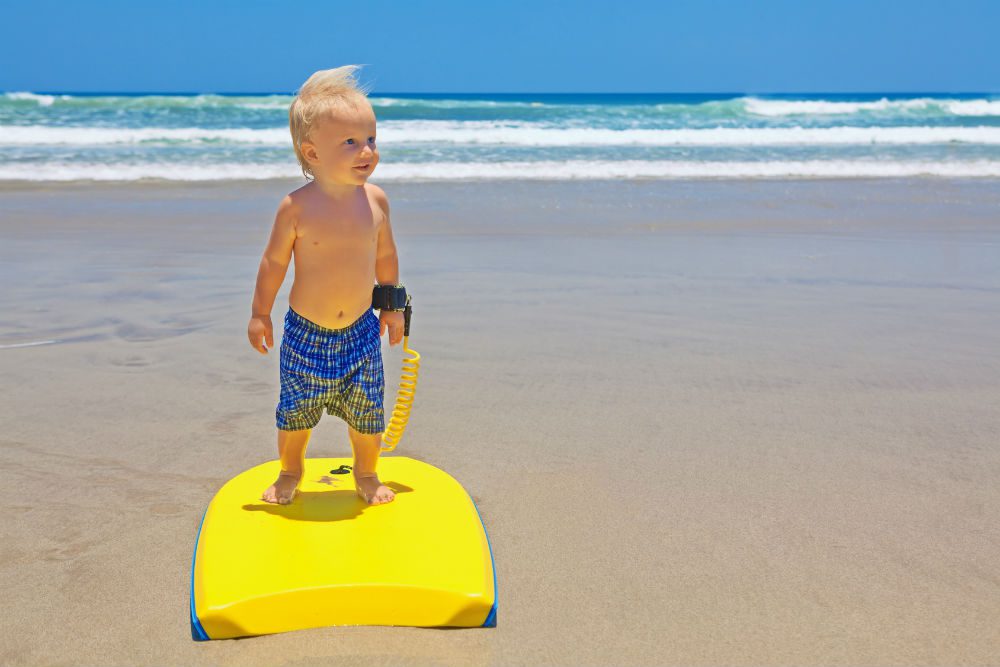
Bodyboarding for beginners starts with the right beach: one with lifeguards, a sand bottom and small waves. Wear a leash and fins, stay between the red and yellow flags where they are posted, and start close to shore in the whitewater.
This page plans a first session: where to go, what to bring and what to do if a current takes you out. The safety advice comes from the Government of Jersey’s beach safety page, Surf Life Saving Australia’s Beachsafe site and the US National Weather Service; the first-session steps come from eBodyboarding, a bodyboarding shop in San Clemente, California. All were read on 2026-10-21. WaterSportHQ editors are not lifeguards or instructors.
Pick a beach with lifeguards and small waves
- The National Weather Service says to check the local beach forecast before you go, talk to the lifeguard, and swim only at a beach with lifeguards. It adds that rip currents often form on calm, sunny days.
- The Government of Jersey says to use your board on a lifeguarded beach and stay between the red and yellow flags, the area lifeguards patrol.
- eBodyboarding’s getting-started guide says a sand bottom is ideal, with no rocks or reef, and that the waves should not be big for a first try. “When in doubt, just ask a lifeguard.”
Watch the water before you go in
eBodyboarding says to spend a few minutes watching the surf first. Look for rocks and bigger waves, and watch people already in the water to see whether a current moves them along the beach.
The Government of Jersey lists the signs of a rip current:
- discoloured, brown water from stirred-up sand
- foam on the surface
- debris floating out to sea
- a rippled patch where the water around it is calm
What to bring for your first session
- A board that fits. eBodyboarding says most beginners start on an entry-level EPS board, which usually comes with a wrist leash. For sizes, see bodyboard sizes.
- A leash. The Government of Jersey says to buy a leash and flippers with any bodyboard.
- Fins. Surf Life Saving Australia says even learners should use fins and a leash, because lifeguards “regularly rescue bodyboarders who get caught in rip currents and can’t kick their way out because they’re not wearing fins”. eBodyboarding says fins are not needed for a quick ride in the whitewater, but are a must once you head out to where waves start to break. These pages differ, and the safety bodies say fins from the start.
For a full kit list, see bodyboarding buying tips. To compare fins, see the bodyboard fins compared.
Start in the whitewater, where you can stand
eBodyboarding’s guide says to start close to shore where your feet touch the bottom. Practice launching forward as the whitewater comes up behind you, then try turning side to side and moving forward and back on the board to feel how speed and control change.
It says knowing where to sit as waves arrive, which it calls “wave knowledge”, comes only from time in the ocean. Paddle out to where waves start to break once riding the whitewater feels easy.
For the steps on the board, see how to use a bodyboard. For body position and steering on a wave, see how to ride a bodyboard.
If a current pulls you out
The Government of Jersey gives “the three Rs”:
- Relax: stay calm and float. Do not swim against the current; swim across it.
- Raise: raise an arm to signal for help and shout if you can.
- Rescue: float, wait for help and follow the lifeguard’s directions.
It adds: if you can, swim parallel to the beach until you are out of the rip, then head for shore. If you get into trouble on a bodyboard, stay with it, because it will keep you afloat.
Two rules for every session
The Government of Jersey says:
- Never swim alone.
- If you see someone in difficulty, never attempt a rescue yourself. Tell a lifeguard or call local emergency services (911 in the US).